


 File
 File


Akobo Minerals - Operational Update for October 2026
Oslo, Norway, 9 November 2026 - Akobo Minerals AB (publ) ("Akobo" or the "Company") (Euronext Growth Oslo: AKOBO), the Scandinavian-based gold producer operating the Segele underground gold mine in Ethiopia, one of the world's highest-grade underground gold mines, provides an operational update for October 2026.
October delivered approximately 12 kg of doré gold at an average processed grade of 11 g/t, providing a solid start to the fourth quarter. Cumulative gold production since start-up has now reached approximately 181 kg.
The lower average processed grade in October primarily reflects a higher proportion of lower-grade development material from cross-drives in the existing mine, as well as material from previously accumulated tailings. At the same time, gold mineralisation continues to be observed in development material from the vertical shaft.
Key highlights
Doré gold production: approximately 12 kg at an average processed grade of 11 g/t
Cumulative doré gold production: approximately 181 kg since start-up
Average processed grade since start-up: approximately 22 g/t
Processing stockpile: approximately 1,100 tonnes, including approximately 800 tonnes of development material from the vertical shaft
Gingibil exploration: Drilling resumed, with the targeted quartz vein intersected in the first two holes and visible gold observed in both
Mining
During October, the Company also commenced work to assess a potentially mineralised area west of the current Segele orebody. Initial work is focused on a shallow area where mineralisation appears to extend from the existing Segele system. The work is at an early stage and further geological assessment will be required before conclusions can be drawn regarding its scale or economic potential.
Vertical shaft development
Development of the vertical shaft continued during October. Ground conditions remained difficult during the month, although recent observations indicate that the shaft may now be entering more competent, harder rock. A cubby was successfully blasted during October, providing a protected area for the underground mining team during hoisting operations. This is expected to reduce the need for personnel to travel up and down the shaft during each hoisting cycle, improving operational efficiency and supporting the continued shaft-sinking process.
The Company expects to present an updated mine development plan in December, following completion of the mine plan currently being prepared with external technical consultants. The updated design will determine the optimal shaft depth and associated lateral development required to access the orebody efficiently. Based on the current infrastructure and subject to the final mine design, the underground operation could extend to approximately 200 metres depth.
The deeper underground infrastructure will also provide an important platform for further underground exploration aimed at identifying additional mining areas and extending the Segele mineralised system at depth.
Exploration
Exploration activity during October focused on the Gingibil prospect, located close to the Segele mine and processing plant and forming part of the broader prospective trend towards Joru in the southern part of the Company's licence area.
Drilling at Gingibil resumed towards the end of October. The targeted shallow quartz vein was successfully intersected in the first drill hole over approximately 2.5 metres downhole, from 3.0 to 5.5 metres, with coarse-grained visible gold observed in the drill core. Subsequent drilling in early November intersected the targeted quartz vein in a second hole, with two quartz vein intersections totalling approximately 1.3 metres within a 1.9-metre downhole interval, and visible gold again observed.
The observations from the first two holes are encouraging and further drilling is planned to assess the continuity and extent of the mineralised structure. Laboratory assays and further geological interpretation will be required to determine the gold grade, true thickness, continuity and potential economic significance of the mineralisation.
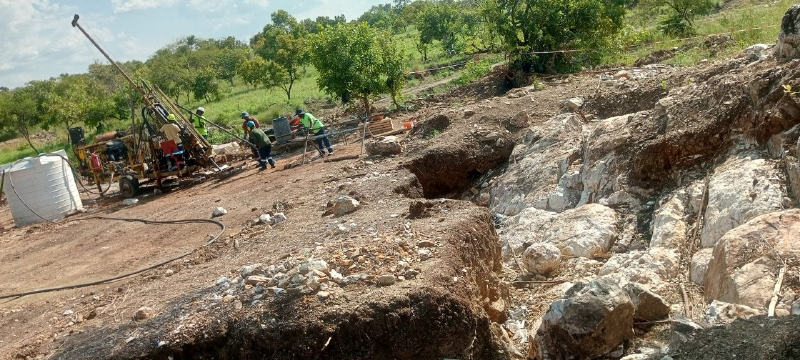
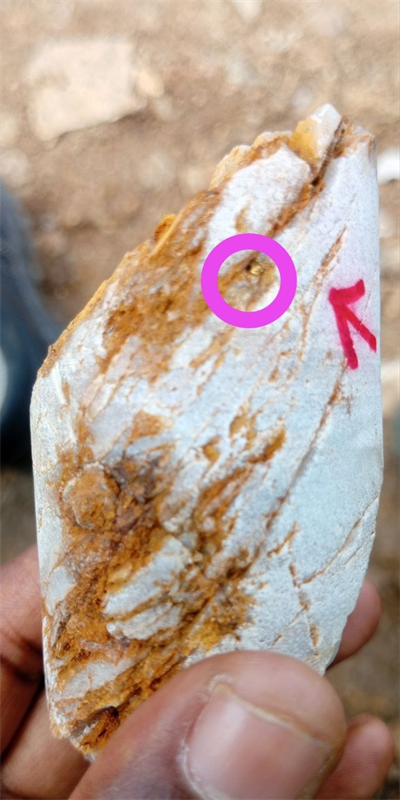
Drilling activities at the Gingibil prospect - Coarse-grained visible gold observed in the targeted quartz vein.
For more information, contact
Jørgen Evjen, CEO, Akobo Minerals
Mob: (+47) 92 80 40 14
Mail: jorgen@akobominerals.com
LinkedIn: www.linkedin.com/company/akobominerals
About Akobo Minerals
Akobo Minerals is a Scandinavian-based gold producer and explorer with more than 15 years of operations in Ethiopia. The Company holds an exploration licence covering 182 km² and a mining licence covering 16 km² in the Gambela region, Dima Woreda.
The Segele mine hosts an Indicated and Inferred Mineral Resource of approximately 69,000 ounces at an average grade of 22.7 g/t gold. The mineralised system remains open at depth, supporting further resource growth and potential mine life extension. In addition, the Company's exploration licence hosts multiple high-quality targets with significant resource potential.
Akobo Minerals places ESG principles at the core of its operations and maintains strong relationships with local communities and government authorities. The Company is committed to sound ethics, transparency and responsible mining practices.
Akobo Minerals is headquartered in Oslo and listed on Euronext Growth Oslo and the Frankfurt Stock Exchange under the ticker AKOBO. In the United States, the Company's shares trade on the OTC Pink Market under the symbol AKOBF.
The Company places strong emphasis on internationally recognised industry standards for exploration, mining and resource reporting.