


 PDF
 File
 File


BioArctic: Five-year data of continuous Leqembi® treatment show increasing benefit over time
Stockholm, Sweden, November 17, 2026 - BioArctic AB's (publ) (Nasdaq Stockholm: BIOA B) partner Eisai today presented new five-year data from the Clarity AD study and its long-term extension, showing increasing clinical benefit with continuous Leqembi treatment in early Alzheimer's disease. The data, presented at the 19th Clinical Trials on Alzheimer's Disease (CTAD) conference in Boston, also showed that 62 percent of patients treated at an earlier stage of disease, with low levels of tau, showed improvement in cognitive function and activities of daily living (CDR-SB[1]), after five years.
Clarity AD is a global, placebo-controlled, double-blind, parallel-group, randomized Phase 3 study involving 1,795 patients with early Alzheimer's disease: 898 in the Leqembi group, receiving 10 mg/kg by intravenous infusion every two weeks, and 897 in the placebo group. Of the patients who completed the 18-month core study, 95% chose to participate in the subsequent long-term extension study. A total of 351 patients received five years of continuous treatment.
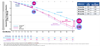
Among patients treated continuously with Leqembi for five years, the difference in cognitive and functional decline compared with matched historic Alzheimer's disease data increased over time. Compared with Alzheimer's Disease Neuroimaging Initiative (ADNI)[2] data, patients treated with Leqembi showed 1.00 points less decline on CDR-SB after three years and 2.05 points less decline after five. Compared with BioFINDER[3] data, the corresponding differences were 1.42 points and 2.54 points, respectively. The difference continued to increase over time.
In an assessment based on CDR-SB scores[4], Leqembi reduced the relative risk of progressing to the next stage of Alzheimer's disease by 36 percent compared with ADNI data. After five years, 61.9 percent of Leqembi-treated patients had progressed to the next disease stage, compared with 77.5 percent in ADNI. The relative risk of progressing from early Alzheimer's disease to moderate or severe dementia was reduced by 49 percent, with 31.0 percent of Leqembi-treated patients progressing compared with 48.7 percent in ADNI.
Earlier treatment associated with greater benefit at five years
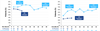
The Clarity AD study included an optional tau PET substudy to identify patients with low levels of tau accumulation in the brain, indicating an earlier stage of Alzheimer's disease. After five years of continuous Leqembi treatment, 66 percent of patients with low tau showed no decline in cognitive and functional impairment as measured by CDR-SB, while 62 percent showed improvement from baseline. Similar results were also observed on other scales, including ADAS-Cog14 and ADCS MCI-ADL. The results support the importance of initiating treatment early in the course of Alzheimer's disease and continuing treatment to sustain the benefit over time.
Consistent safety profile over five years
No new safety findings were observed during five years of continuous Leqembi treatment. ARIA-E occurred most frequently within the first six months of treatment, with incidences declining in subsequent years. When results were grouped into 12-month treatment intervals, the incidence of ARIA-E was 13.5% during the first 12 months, followed by 3.6%, 1.1%, 1.3%, and 0.6% in subsequent intervals compared with 1.7% in the placebo group over 18 months.
Alzheimer's disease is a progressive, relentless disease with amyloid-beta (Aβ) and tau as hallmarks. It is caused by a continuous underlying neurotoxic process, driven by soluble aggregates of amyloid called protofibrils, that begins before amyloid plaque accumulation and continues after plaque removal. Leqembi fights Alzheimer's disease in two ways - targeting both protofibrils and amyloid plaque.[5],[6],[7]
---
The information was released for public disclosure, through the agency of the contact person below, on November 17, 2026, at 12:05 am CET.
For further information, please contact:
Oskar Bosson, Chief Investor Relations & Communications Officer
E-mail: oskar.bosson@bioarctic.com
Telephone: +46 704 107 180
Jenny Ljunggren, External Communications and Investor Relations Manager
E-mail: jenny.ljunggren@bioarctic.com
Telephone: +46 76 013 86 08
About Leqembi® (lecanemab)
Leqembi is the result of a strategic research alliance between BioArctic and Eisai. It is a humanized immunoglobulin gamma 1 (IgG1) monoclonal antibody directed against aggregated soluble (protofibril) and insoluble forms of amyloid-beta (Aβ).
Leqembi is approved in 53 countries and is under regulatory review in six countries and regions. Following the initial phase with treatment every two weeks for 18 months, intravenous (IV) maintenance dosing with treatment every four weeks is approved in nine countries and regions, including the US, Japan, China and the United Kingdom, and applications have been filed in eleven countries and regions. In the US, Leqembi Iqlik® is approved for subcutaneous dosing with an autoinjector as a starting dose and maintenance treatment of early Alzheimer's disease. Subcutaneous initiation treatment was approved in China and Japan in September 2026, and applications are under review in four countries.
Eisai's Phase 3 clinical study (AHEAD 3-45) with lecanemab in individuals with preclinical Alzheimer's disease has been ongoing since July 2020. These individuals are clinically normal and have intermediate or elevated levels of amyloid in their brains. The study was fully recruited in October 2024. AHEAD 3-45 is a four-year study conducted as a public-private partnership between Eisai, Biogen and the Alzheimer's Clinical Trial Consortium that provides the infrastructure for academic clinical trials in Alzheimer's disease and related dementias in the US, funded by the National Institute on Aging, part of the National Institutes of Health. Since January 2022, the Tau NexGen clinical study for Dominantly Inherited Alzheimer's disease (DIAD), that is conducted by Dominantly Inherited Alzheimer Network Trials Unit (DIAN-TU), led by Washington University School of Medicine in St. Louis, is ongoing and includes lecanemab as the backbone anti-amyloid therapy.
About the collaboration between BioArctic and Eisai
BioArctic has a long-term collaboration with Eisai since 2005 regarding the development and commercialization of drugs for the treatment of Alzheimer's disease. The most important agreements are the Development and Commercialization agreement for the lecanemab antibody, which was signed in 2007, and the Development and Commercialization agreement for the antibody lecanemab back-up for Alzheimer's disease, which was signed in 2015. In 2014, Eisai and Biogen entered into a joint development and commercialization agreement for lecanemab. Eisai is responsible for the clinical development, application for market approval and commercialization of the products for Alzheimer's disease. BioArctic has the right to commercialize lecanemab in the Nordic region together with Eisai. BioArctic has no development costs for lecanemab in Alzheimer's disease and is entitled to payments in connection with sales milestones as well as royalties on global sales.
About BioArctic AB
BioArctic AB (publ) is a Swedish research-based biopharma company focusing on innovative treatments that can delay or stop the progression of neurodegenerative diseases. The company invented Leqembi® (lecanemab) - the world's first drug proven to slow the progression of the disease and reduce cognitive impairment in early Alzheimer's disease. Leqembi has been developed together with BioArctic's partner Eisai, who are responsible for regulatory interactions and commercialization globally. In addition to Leqembi, BioArctic has a broad research portfolio with antibodies against Parkinson's disease and ALS as well as additional projects against Alzheimer's disease. Several of the projects utilize the company's proprietary BrainTransporter™ technology, which has the potential to actively transport therapies across the blood-brain barrier to enhance the efficacy of the treatment. BioArctic's B share (BIOA B) is listed on Nasdaq Stockholm Large Cap. For further information, please visit www.bioarctic.com.
[1] Clinical Dementia Rating - Sum of Boxes (CDR-SB), is a commonly used measure of cognitive and functional impairment in Alzheimer's disease
[2] ADNI is a clinical research project launched in 2005 to develop methods to predict the onset and progression of Alzheimer's disease (AD) and to confirm the effectiveness of treatments. The project involves a multi-year longitudinal observation targeting healthy elderly individuals as well as patients with mild cognitive impairment (MCI) and early stages of AD.
[3] BioFINDER subjects are similar to Study 301 and ADNI subjects, except all BioFINDER subjects are in the MCI stage and no mild AD subjects are included, and their baseline CDR-SB is lower. BioFINDER is a large-scale, long-term prospective study led by Lund University in Sweden, aiming to establish early diagnosis and elucidate pathophysiology of neurodegenerative diseases. In addition to AD, the study also focuses on conditions including Parkinson's disease. Individuals participating in the study undergo regular clinical assessments, cognitive function tests, brain imaging (MRI, Aβ PET, Tau PET), and collection of biomarkers from blood and cerebrospinal fluid (CSF).
[4] Disease-stage progression was assessed using CDR-SB rather than the global CDR to capture changes in disease stage in greater detail, because assessments were conducted at relatively long intervals and control-group data were used to impute missing values. Based on CDR-SB scores, progression was defined as a transition from MCI (0.5-4.0) to mild AD dementia (4.5-9.0) or moderate AD dementia (9.5-15.5). Progression to moderate or severe dementia was defined as a transition to moderate dementia (9.5-15.5) or severe dementia (16.0-18.0), based on the CDR-SB staging criteria.
[5] Amin L, Harris DA. Aβ receptors specifically recognize molecular features displayed by fibril ends and neurotoxic oligomers. Nat Commun. 2021;12:3451. doi:10.1038/s41467-021-23507-z
[6] Ono K, Tsuji M. Protofibrils of Amyloid-β are Important Targets of a Disease-Modifying Approach for Alzheimer's Disease. Int J Mol Sci. 2020;21(3):952. doi: 10.3390/ijms21030952. PMID: 32023927; PMCID: PMC7037706.
[7] Hampel H, Hardy J, Blennow K, et al. The amyloid pathway in Alzheimer's disease. Mol Psychiatry. 2021;26(10):5481-5503.